

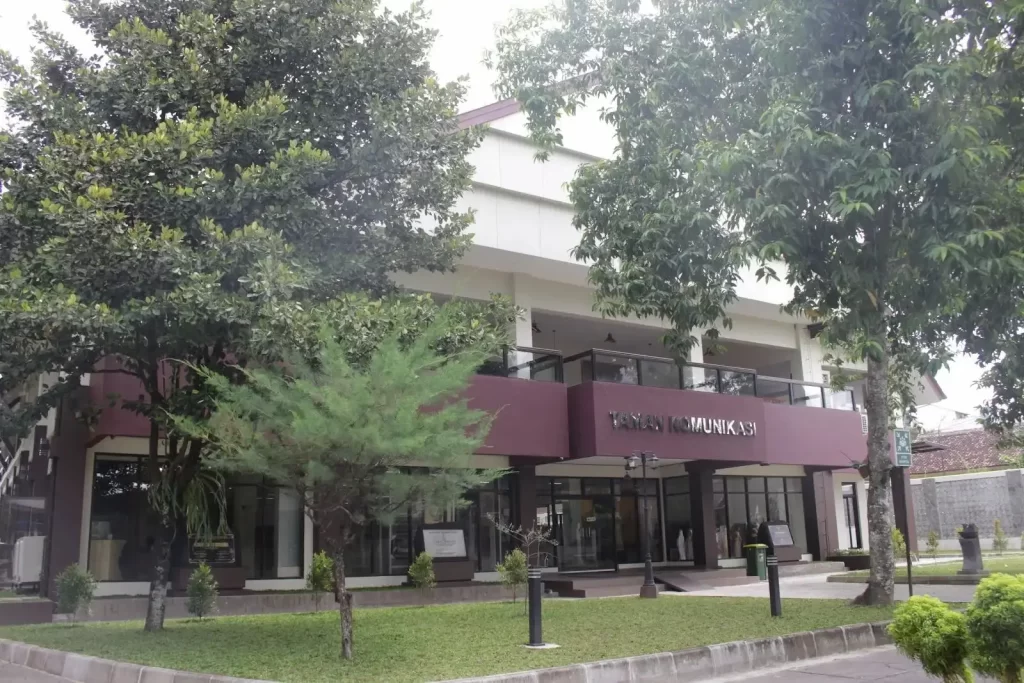
PT Kanisius is a publishing and printing company owned by the Jesuits in Indonesia. It is the oldest Catholic publishing and printing house in the country, having been in operation since 1922. The company was founded by Fr. Hoeberechts SJ, a Dutch missionary working on the island of Java.
The journey of PT Kanisius is deeply intertwined with the history of the Catholic Church in Indonesia, especially the development of the mission in Java. Located on the grounds of a former iron factory in Yogyakarta, Fr Hoeberechts SJ, together with the FIC brothers, began the printing work under the name Canisius Drukkerij (Dutch for Canisius Printing). Their main goal was to meet the need for books for the education of native Javanese children.
Over time, Canisius Drukkerij grew into a Catholic publishing house, producing catechism and prayer books that supported the growth and strengthened the presence of the Church in Java. As the company expanded its services beyond printing alone, its name changed to Penerbit-Percetakan Kanisius (Kanisius Publisher and Printing House). The services it provided for the Church and education in Java reflected a key Jesuit principle: that the success of the mission wasn’t measured by the number of people baptised, but by the Church’s genuine care for the fundamental needs of local communities—in this case, education for the native population.
Today, Penerbit-Percetakan Kanisius has transformed into PT Kanisius (Kanisius Ltd). You could say that PT Kanisius is the result of the transformation process of the old Kanisius Publishing and Printing House. As is often the case, transformation tends to be triggered by severe crises — and the same holds true here. PT Kanisius emerged as a new entity following a series of difficult moments.
Throughout its 103-year journey, Kanisius has repeatedly faced serious crises, yet time and again, it has managed to pull through. One crisis I personally experienced occurred in 2010, when the company almost went bankrupt due to severe mismanagement. For me, it felt like St Ignatius’ famous “cannonball moment”—a painful but transformative experience.
That year was full of turmoil, forcing the company to undergo a deep, fundamental, and continuous transformation in order to rebuild. Change was required not just in business processes but also in mindset, perspectives, and company culture. The crisis was so severe that in 2011, the Indonesian Province took the drastic step of removing the entire top management team at Kanisius.
At the same time, the province formed a task force to carry out the company’s restructuring so it could continue operations. This task force consisted of five lay employees from within Kanisius—including myself. We were not experienced leaders with years of management expertise. We were just ordinary employees from different divisions—four women and one man. None of us had the necessary business management knowledge or experience to immediately know how to start fixing a company in such deep crisis. We did not know where and how to begin.
However, one thing we were sure of was that as a team, we had to stay solid and engaged with one another. At one point, a young employee suggested that the members of the task force undergo an Ignatian retreat together guided by a Jesuit spiritual director. The hope was that this shared retreat would help strengthen our team’s unity and give us the resilience to face the challenges ahead.
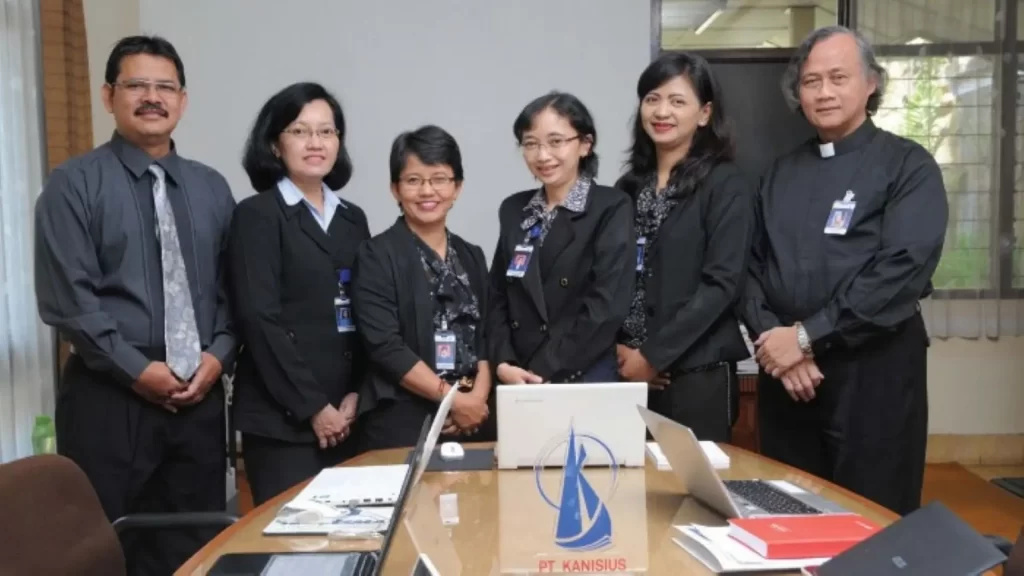
We accepted the suggestion, mainly because as a task force, we were under such intense pressure that we felt we needed a moment of release—a chance to step back and breathe. What started as a one-time retreat to relieve stress gradually became a regular practice. We ended up holding these retreats once a month, consistently, for five years.
It wasn’t always easy to go through these retreats. Sometimes the schedule coincided with moments when internal conflicts at the company were at their peak, leaving us feeling deeply uncomfortable. But the five of us had committed to sticking with each stage of the retreat process. For the Jesuit spiritual director accompanying us, the challenge was working with five people who were carrying heavy psychological burdens, which in some cases even affected our physical health. Each retreat meeting was tough and often left us struggling to keep pace with the spiritual dynamics we were navigating.
Through these retreats, we came to know key aspects of Ignatian Spirituality: the call of the Eternal King, discernment of spirits, the four-week Spiritual Exercises, election, discernment, contemplation, and more. These Ignatian retreats gave us the strength to keep moving forward—to patiently untangle each problem, to summon the fighting spirit needed to face all kinds of challenges, even those that sometimes threatened our safety. The retreat became an important turning point. It grounded us, helped us rediscover our purpose, and strengthened our commitment to the mission we were carrying. Despite lacking formal management training, we drew strength from our shared values, our trust in one another, and the spiritual foundation we had built together.
From that point on, little by little, we began taking concrete steps to rebuild the company. We examined the roots of the company’s problems, restructured its operations, and slowly started introducing a new work culture that emphasised teamwork, accountability, and continuous improvement. It was a long and often painful journey, filled with trial and error, but over time, we managed to stabilise the company and steer it back on a sustainable path.
What this experience taught us is that a company’s resilience doesn’t come solely from technical expertise or financial resources—it also comes from the human spirit: the willingness to work together, to stay committed even in the darkest moments, and to believe in a shared mission. For PT Kanisius, this mission has always been more than just publishing and printing books; it’s about serving the educational and spiritual needs of the community, continuing the legacy set in motion over a century ago.
Surprisingly, practices like the daily examen, prayer, creating moments of silence, speaking honestly with God, and opening ourselves to the Holy Spirit’s guidance had a profound impact on our ability to think clearly amidst the turmoil. That clarity gave us incredible energy to rise from adversity and to work in synergy with many well-intentioned partners.
As the company evolved, Ignatian Spirituality played a major role in transforming the attitudes and behaviours of the people working within it. Learning from the 2010 crisis, we have consistently encouraged all employees at every level to get to know and deepen their understanding of Ignatian Spirituality as the foundation for their actions, both personally and professionally. From top management to middle management to frontline managers, we invited them to explore this spirituality—particularly its focus on personal and communal discernment. Fortunately, the Indonesian Provincial assigned a senior Jesuit to accompany us in running the company and living out Ignatian spirituality within the organisation’s dynamics, together with all 278 employees involved.
For me personally, Ignatian spirituality has helped me see my involvement in the task force, and in the journey of PT Kanisius as a whole, as a true calling. I am grateful for this calling, grateful to have come to know this spirituality that has made me feel more human. And I sincerely hope that all employees at PT Kanisius can also share in this spiritual richness by embracing and living out this spirituality in their own lives.