

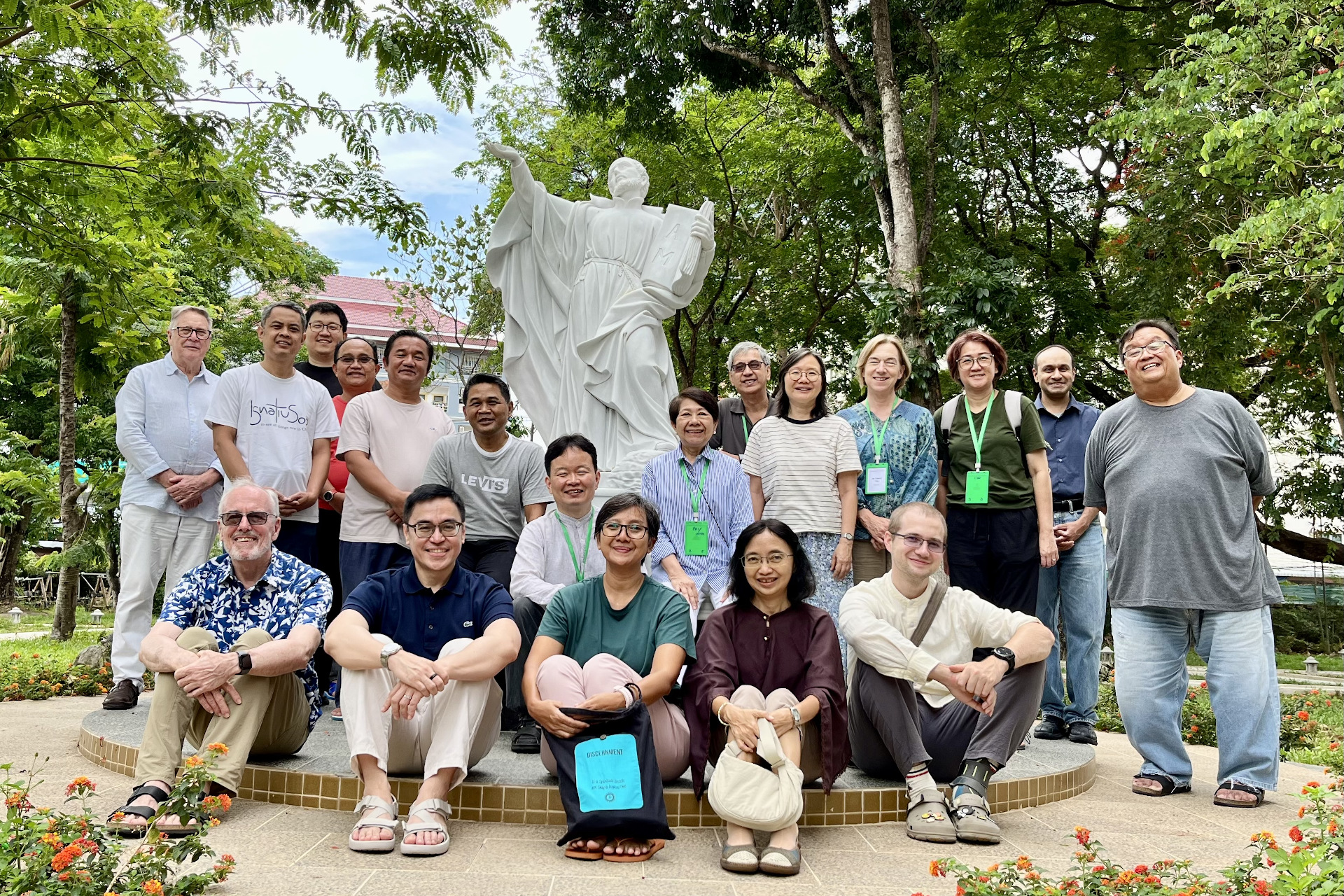
Participants of the JCAP Training for Facilitators of Discernment in Common from Australia, Hong Kong, Indonesia, Korea, Myanmar, Philippines, Taiwan, and Thailand
I attended two meetings at the Seven Fountains Retreat House in Chiang Mai, Thailand during the first two weeks of May. The first was the annual meeting of the Ignatian Spirituality Network (ISN) of the Jesuit Conference of Asia Pacific (JCAP) hosted by the Australian Province, and the second was the pilot JCAP Training for Facilitators of Discernment in Common (DIC). I arrived with questions about ISN’s identity and purpose in JCAP and doubts about my capability to facilitate DIC. But I left Chiang Mai with much gratitude for having participated in the two meetings, blessed with clarity and a new sense of purpose.
Fr Edward Quinnan SJ, Superior of Micronesia and ISN Coordinator, facilitated the five-day ISN meeting from 3 to 8 May. We started with an Examen of the past year. Then each representative reported on progress in promoting Ignatian spirituality formation and practices in their respective areas. A discernment in common on ISN’s identity and future mission capped the week.
We were consoled to see the fruits of each province’s initiatives, even in dire conditions in some countries. It was also energising to see each one’s creativity flourish and to see how ISN has served the Society and the Church through its own programmes and in partnership with other ministries and institutions. Through our discernment in common on ISN’s identity, we were able to articulate that ISN is “an agent of the Universal Society of Jesus that promotes Ignatian Spirituality, in particular discernment in common, in JCAP and its associated provinces and regions as a way of walking together for peace and reconciliation in all strata of the Society and service of the Church”.
Thus, ISN is JCAP’s main arm in rolling out the DIC Training for Facilitators across the conference. This was affirmed by the presence of JCAP President Fr Primitivo Viray SJ, who also participated in the facilitators’ training from 10 to 15 May. Fr Quinnan organised this pilot offering in collaboration with the other Salamanca-trained JCAP facilitators: Br Ian Cribb SJ, Sally Law, Frances Tilly, and JP Villanueva. They guided the participants through the whole process of designing a DIC programme.
Day 1 was devoted to the facilitator’s interiority. What I found very striking was the invitation to “look within” and “see beyond” as well as to be indifferent, ie, “the capacity to let go of what does not help me to love God or others, while staying engaged with what does.” We recalled our consolations and desolations in our experiences of facilitating groups and reflected on where we sensed God’s encouragement and invitations. The fruits of my prayer helped me to become more in touch with the graces I have received in this ministry.
On Day 2, we began to experience the “how-to’s” of DIC. Pope Francis says, “Without prayer, there is no discernment.” Thus, a regular prayer life is non-negotiable for individuals and communities, as it can transform one’s disposition into a “spirit of discernment”.
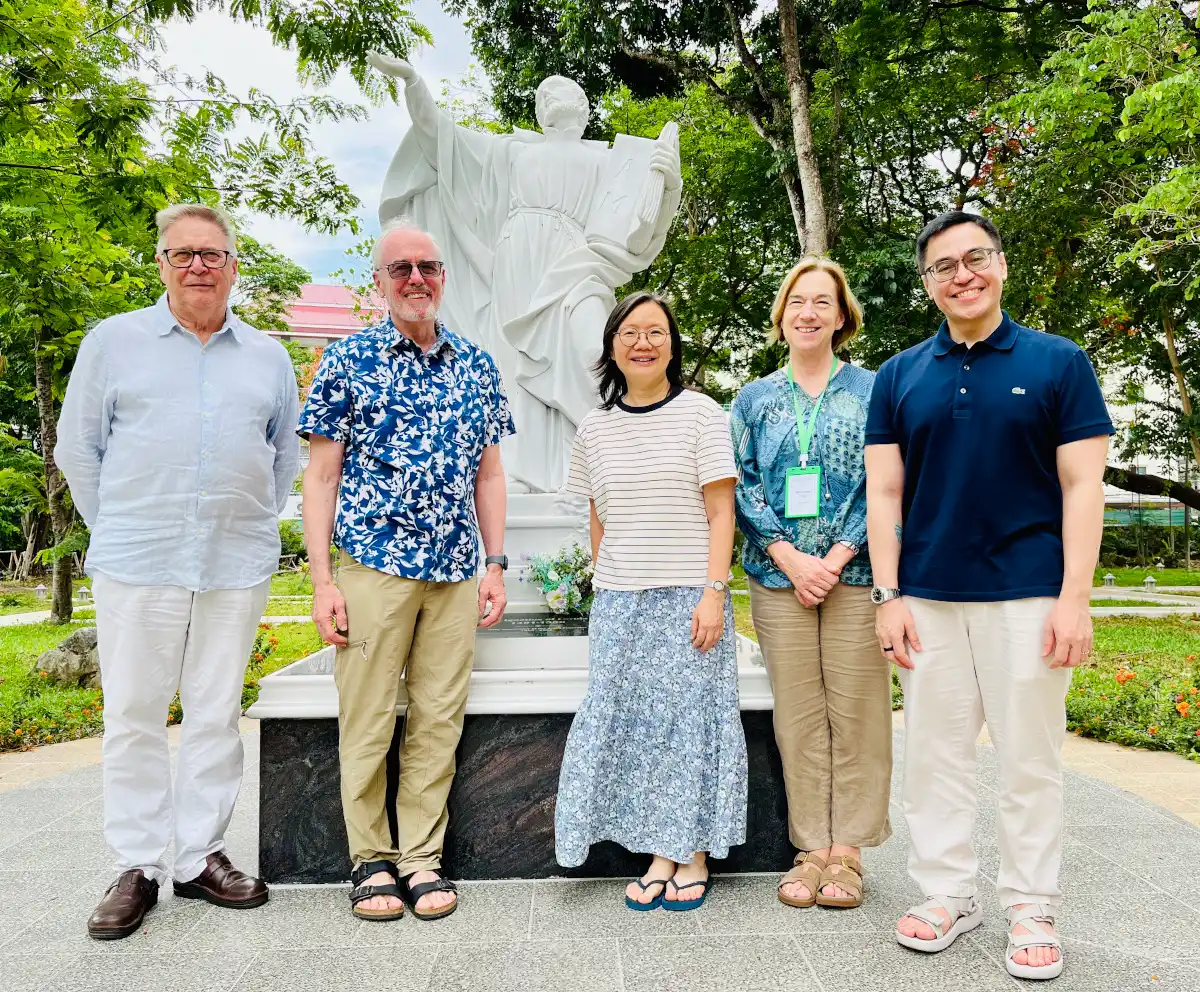
The organising committee (L-R) Br Ian Cribb SJ, Fr Edward Quinnan SJ, Sally Law, Frances Tilly, and JP Villanueva
Being aware of DIC’s scriptural and theological foundations, we examined the nature of community and how it develops into a discerning community. What a community discerns does not necessarily have to do with a decision that a community has to make. It can simply be a sharing of the community’s response to a significant experience or event, its consolations and desolations in a given mission, or future possibilities. Thus, it is possible to have different types of discernment in common.
This was reassuring for us who think that not all groups are ready for a full-blown apostolic planning or decision type of discernment. Such groups have to be guided through a step-by-step process of forming a disposition of discernment.
Days 3 and 4 focused on the growth of the community from “I” to “We”, its need for conversion, and the application of rules for discernment of spirits to a group setting. We also had the opportunity to apply the principles to cases and flesh out our initial plans for sharing the DIC process back home. On Day 5, we drafted and presented our specific and concrete plans in plenary.
Throughout the course, we received inputs, prayed on our experiences of facilitating groups in the light of these inputs, shared the fruits of our prayer in daily small group spiritual conversations, and later on applied our insights to our plans as they evolved daily. This method was quite effective in transforming us into the facilitators we need to be.
My experience at Seven Fountains helped me to become more aware of my inner disposition formed in Ignatian spirituality, my consoling experiences of God’s assurances in the ministry, and my desire to share DIC with others. It dispelled much of the self-doubt I had carried, but I continue to rely on the Spirit for guidance and inspiration as I cooperate with God’s plan.