

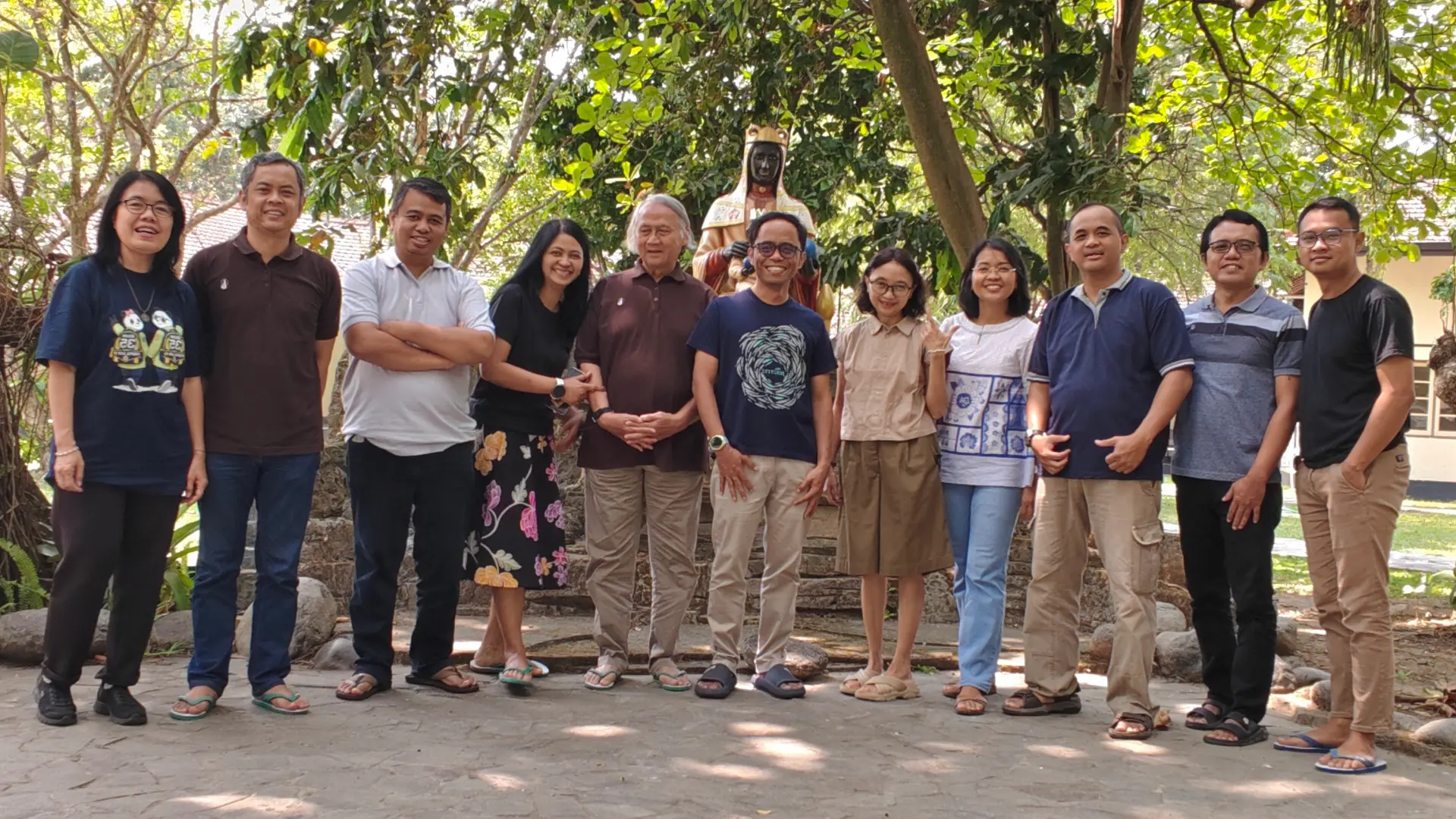
 The following is a summary of a case study on discernment in common. Read the full case study in English and Bahasa Indonesia.
PT Kanisius in Indonesia will mark its 105th anniversary in January 2027. As this Jesuit work engaged in publishing, printing, and trading, looks to sustain its operations and achieve significant economic growth, it also faces the challenge of remaining faithful to its mission and Ignatian identity.
Each member of the Board of Directors (BOD) had their own dreams and concerns about the company’s future. Discernment in Common (DIC) offered a way to bring these together and discern the direction of the company for the next 10 years. Through shared reflection and spiritual conversation, the BOD identified key areas requiring attention.
Challenges and enabling conditions
The limited availability of participants meant that the three rounds of spiritual conversation had to be spread over two meetings. The second meeting began by recalling the previous spiritual conversation and reconnecting with the inner movements as they had experienced at the time. This was not easy, and not all participants were necessarily able to fully reconnect with those inner movements.
What facilitated the process was the familiarity of the participants with one another, including each other’s strengths and weaknesses. The spaces for spiritual conversation were clean, cool, quiet, and with adequate refreshments. The approaching 105th anniversary provided an additional impetus to reflect on the company’s journey and discern its future.
The process
DIC is integrated into the annual retreat programme organised by PT Kanisius as part of its ongoing formation.
Stage 1: Retreat preparation
Before the retreat, participants reflected on their work experience over the previous month, identifying moments that made them proud, experiences that disappointed them, and the lessons they had learnt from them.
Stage 2: Guided Retreat
Participants then undertook a three-day retreat guided by Fr Benedictus Hari Juliawan SJ. In an atmosphere of silentium (silence, stillness, quiet), they revisited and prayed with their written reflections. With the guidance of the retreat director, they were invited to deepen and interiorise their reflections on the history of the company and its direction for the future. The retreat concluded with the participants sharing the fruits of their reflection.
Stage 3: Spiritual Conversation
Two weeks after the retreat, participants reconvened for spiritual conversation to share the fruits of their reflections from the retreat. Because of their schedules, rounds 1 and 2 were held together, while round 3 took place a week later. This process produced a list of strategic actions for PT Kanisius, which would then be mapped according to short-term (1–2 years), medium-term (3–5 years), and long-term (6–10 years) priorities.
Tensions and Difficulties
- Spiritual Movements and Rational Strategic Arguments
From the second round, we sensed a shift in the conversation from attending to spiritual movements towards more rational and strategic discussion. At times, it resembled a business strategy meeting.
The moments of silent prayer at the beginning and end helped restore the spiritual character of the process. Yet the nature of the discussion also required accurate data, analysis, and rational argumentation.
This raised an important question: How can DIC remain attentive to spiritual movements while engaging responsibly with the rational and data-driven analysis required of strategic decision-making?
- Time and Energy
DIC required a considerable amount of time and commitment from participants, who had to sustain the process alongside demanding work schedules and targets.
Action Taken
Because many of the insights emerging from DIC were strategic and professional in nature, they required further grounding in quantitative and qualitative data. The key points were therefore brought into a series of Focus Group Discussions (FGDs), organised around specific themes, for further examination.
Results
One visible result was a growing conviction among BOD members about the key points that had emerged from DIC. This conviction prepared them spiritually to take a proactive role in the subsequent FGDs, where the points emerging from DIC could be examined further for feasibility and viability.
Another positive outcome was that the participants became more accustomed to engaging not only their minds but also their hearts in the process of making collective decisions for the good of the company.
What We Learned
- DIC can be applied to general topics that may not appear to be directly related to spiritual matters.
- DIC can be combined with FGDs to support more grounded and well-considered decisions.
- DIC can be more effective when carried out in several stages, beginning with a process of preparation and ending with sufficient time for interiorisation, without rushing the process.
- DIC is more than a process of collective decision-making. It can cultivate habits of listening, reflecting, and shared responsibility marked by sincerity and openness.
- DIC needs to be adapted thoughtfully to the context and objectives of the organisation so that it can serve its purpose more effectively.